Collective Worship at St. Mary’s
At our school, Collective Worship is a valued part of our daily life. It provides a space for reflection, celebration, and the nurturing of spiritual, moral, social, and cultural development (SMSC). We aim to create inclusive, meaningful experiences that support the values of our diverse school community.
Legal Framework
Collective Worship is a statutory requirement for all maintained schools in England under the Education Reform Act 1988. It must be provided daily and be “wholly or mainly of a broadly Christian character”, unless a determination has been granted by the local SACRE (Standing Advisory Council on Religious Education). This means worship should reflect the broad traditions of Christian belief without being distinctive of any particular denomination.
Parents have the right to withdraw their child from Collective Worship, and sixth-form students may choose whether to attend.
Our Approach
We interpret Collective Worship in a way that is inclusive and respectful of all beliefs.
Our programme:
- Celebrates shared values such as kindness, respect, compassion, and responsibility.
- Reflects the diversity of our school community, drawing on stories, festivals, and themes from a range of world faiths and secular perspectives.
- Encourages reflection, offering pupils time to consider personal and global issues.
- Supports SMSC development, helping pupils explore meaning, purpose, and values in their lives.
Assemblies may be held in year groups, key stages, or whole-school gatherings, and can include music, storytelling, prayer or reflection, and pupil contributions.
Planning and Participation
Collective Worship is planned collaboratively by staff and may include input from pupils. We also welcome visitors from local faith and community groups to enrich our programme, ensuring all safeguarding procedures are followed.
Themes are chosen to align with school values, national events, and current issues. For example, assemblies may focus on British Values, mental health awareness, cultural celebrations, or humanitarian topics.
Inclusivity and Respect
We strive to ensure that Collective Worship is:
- Inclusive of pupils of all faiths and none.
- Educational, with clear learning aims.
- Reflective, allowing space for personal thought.
- Responsive to the needs and interests of our pupils and community.
Where prayer is used, it is introduced in a way that allows pupils to engage according to their own beliefs—whether through spiritual reflection or thoughtful contemplation.
With Christ at our centre, prayer, worship and liturgical celebration are central to our Catholic values and form an integral part of the school day. Prayer is encouraged in a variety of methods; – private individual prayer, group prayer, and whole school prayer. We have a prayer area in school, bible buddies, prayer bags (which are sent home in each class), prayer leaders in assemblies and our enthusiastic and liturgy leaders during our class prayer and liturgy time.
Every Wednesday, Mr Gilmour leads the assembly base on the Sunday Gospel and this follows the liturgical year. The children are active participants and displays in the hall support the teachings of the assembly. We have Monday monthly whole school Mass and Fr Sony leads us in church. Each Friday afternoon, Mr Gilmour leads Big Heart award celebration assembly and the children enjoy learning traditional hymns and engaging songs. Sometimes, we have a focus which the children will lead, especially if they have planned a charity event and the children will also present to the whole school as party of care for our common home.
Each child takes part in a daily act of worship that lasts for 10 minutes. Traditional and formal prayers are used at lunchtime and to open and close the school day sessions. The children also plan and lead acts of worship within each of their classes. This happens daily and the children from Year 3 lead Lectio Divina and we are beginning to incorporate Visio Divina to further enhance and deepen our experiences with God.
Each class has a rota for leading prayer and liturgy and four children come together to plan the special worship time for the rest of the class. There are four children to correspond with the four parts of our prayer and liturgy structure and each class has four separate packs of resources to support the children’s independence and leading of the worship. The children use this template to plan and ensure careful connection with the class to enable the scripture to reach and touch each individual child. This is all part of deepening our relationship with God and developing our human person.
With Christ at our centre, prayer, worship and liturgical celebration are central to our Catholic values and form an integral part of the school day. Prayer is encouraged in a variety of methods; private individual prayer, group prayer, and whole school prayer. We have a prayer area in school, bible buddies, prayer bags (which are sent home in each class), prayer leaders in assemblies and our enthusiastic and liturgy leaders during our class prayer and liturgy time.
Every Monday morning, Miss Deakin leads the assembly base on the Sunday Gospel and this follows the liturgical year. The children are active participants and displays in the hall support the teachings of the assembly. Each Friday afternoon, teachers lead an award celebration assembly and the children enjoy learning traditional hymns and engaging songs. Sometimes, we have a focus which the children will lead, especially if they have planned a charity event and the children will also present to the whole school as party of care for our common home.
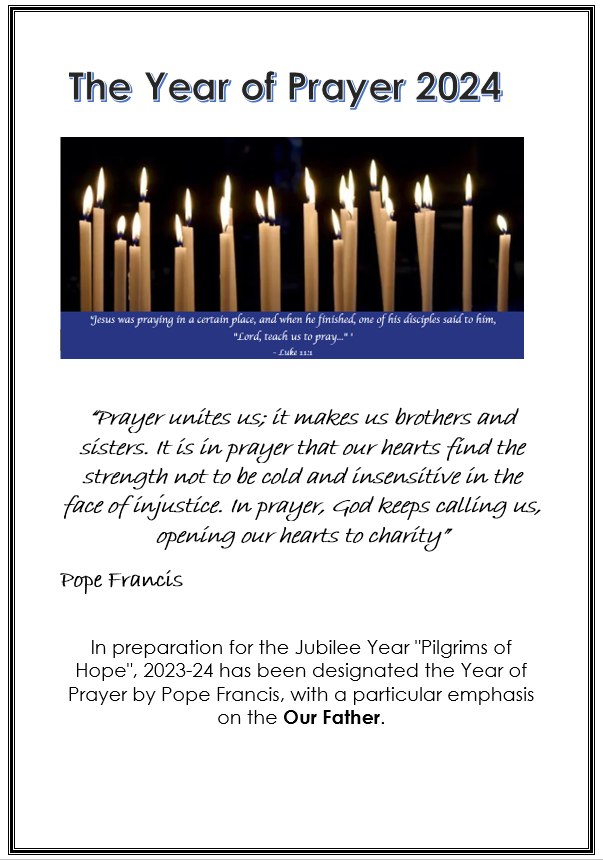
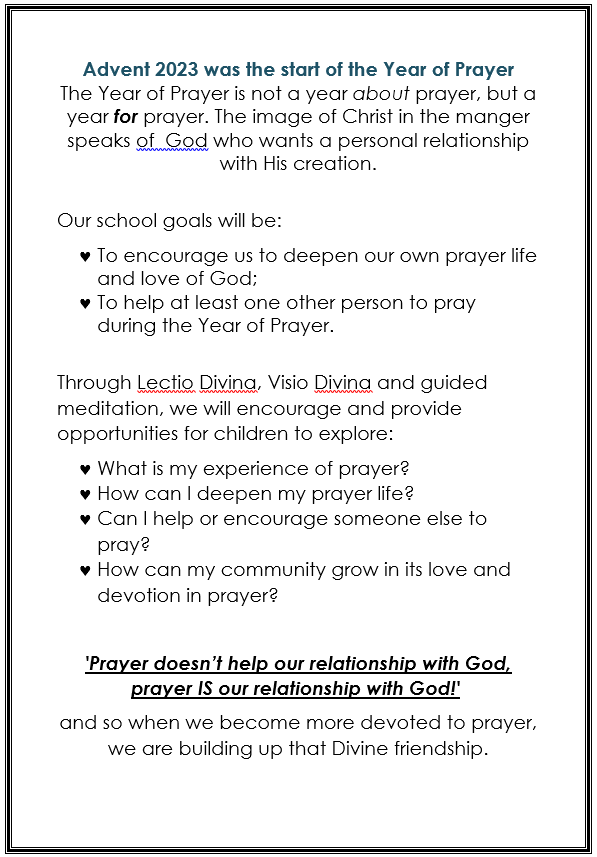
Each child takes part in a daily act of worship that lasts for 15 minutes. Traditional and formal prayers are used at lunchtime and to open and close the school day sessions. The children also plan and lead acts of worship within each of their classes. This happens daily and the children from Year 3 lead Lectio Divina and we are beginning to incorporate Visio Divina to further enhance and deepen our experiences with God.
Each class has a rota for leading prayer and liturgy and four children come together to plan the special worship time for the rest of the class. There are four children to correspond with the four parts of our prayer and liturgy structure and each class has four separate packs of resources to support the children’s independence and leading of the worship. The children use this template to plan and ensure careful connection with the class to enable the scripture to reach and touch each individual child. This is all part of deepening our relationship with God and developing our human person.
Collective Worship across every class uses the same structure. We gather, using prayers or actions or music. We encourage children, who play musical instruments to use their talents in the gather part of the worship, to set the mood and calmly engage their peers. We then listen to scripture readings. We reflect on the meaning of the scripture and something picture to consider what it is saying to us. Finally, we go forth by reflecting on the scripture and taking this forward into our work throughout the day. In each class, there is a prayer and liturgy book where pictures, planning templates and responses are kept as a reminder and record of the acts of worship.
Sharing Sunday's Gospel
The Wednesday Word, sharing Sunday’s Gospel, connecting Home, School & Parish with the Sunday Gospel to pray for the best for our children.